
Fernando Ramos
Co-Founder, Co-CEO & CFOAgentic Engineering
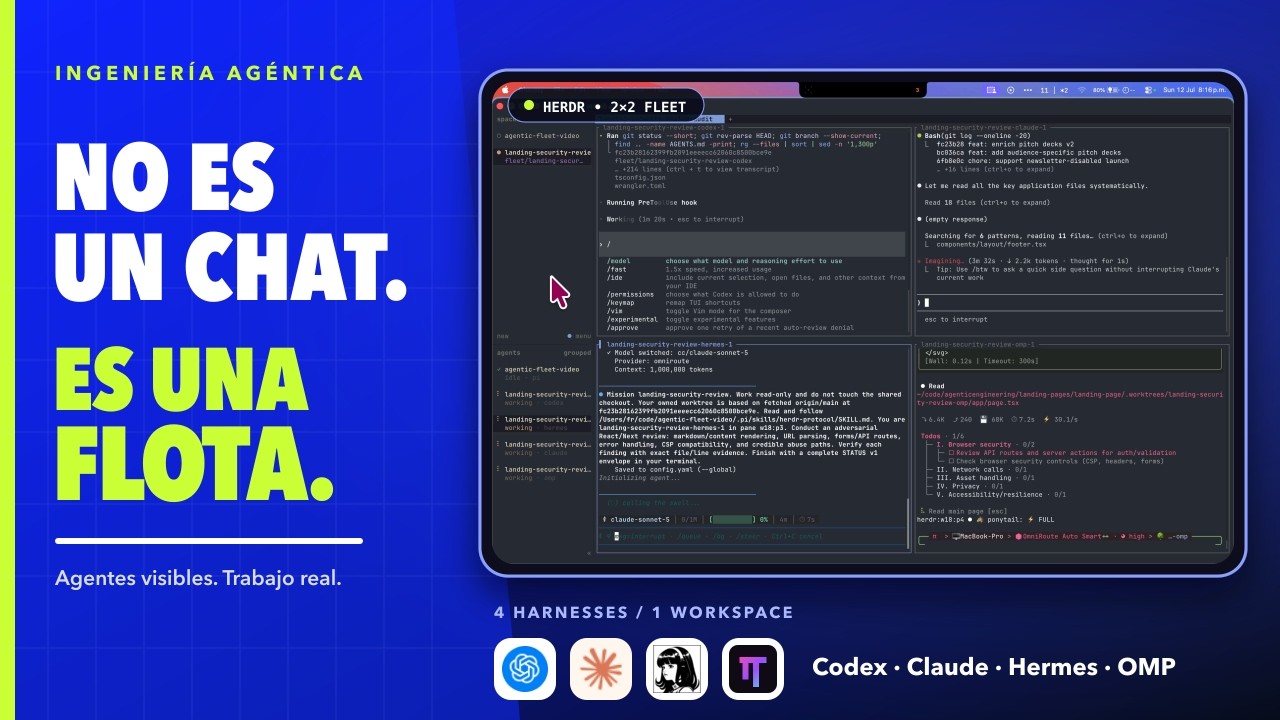
Fig. 1. One orchestrator, specialised agents, their subagents. Every edge is observable.
Selected work
- 01CuriaLegal AI platform2026–nowAI for Mexican lawyers: cases, sources and human review in one workspace.
- 02Production AIEnterprise automation2024–2025Voice and WhatsApp automation in daily operations, delivered with a team of 12 developers.
- 03SensorGridResearch manuscript2026Monitoring physical systems so trouble shows up as a pattern before it becomes a breakdown.
- 04MemSWEBenchmark research2026A benchmark that tests agent memory on real software maintenance, with everything else held constant.
Open source
Tools for working with agents, in public.
Nine agent skills · MITEngineering skills with evidence.The Six Rules as installable skills for Claude Code, Codex, Gemini CLI, Cursor and more: prove it is done, carry context between sessions, and mix models without losing the thread.Explore the skillsSpecSafe
MITSpec-driven workflow
A skills-first framework that keeps coding agents on the intended outcome: spec, test, code, QA, complete. Works across Claude Code, Cursor, OpenCode, Aider, Zed, Gemini and more.
Odin
MITAgent command center
An overlay on the Pi coding agent that adds fleet management, handoffs and multi-agent orchestration, while leaving upstream Pi untouched.
Seshat
MITAgent harness
A custom Pi harness with persistent memory, the SpecSafe slice lifecycle, per-slice cost accounting and agent-aware git traceability.
Method
Agents are not chat windows.
I am happiest when a real problem meets the right technology. Artificial intelligence is the most exciting tool I have found for that: it lets a small team build what used to take a whole company. This is how I like to work with it.
One orchestrator manages specialised agents, and each of them manages its own subagents. There is no best model and no best harness, so I use each for what it does well, and I only scale a way of working once it is standard and trusted. Six rules keep it honest.
- 01
Observable
An agent you cannot see is an agent you cannot improve, correct or trust.
- 02
Not a clipboard
Do not be the person who copies one agent’s output into another. Let them talk to each other.
- 03
Evidence of done
Saying it is finished is not proof. Ask to see the work, and that it is right.
- 04
Context continues
Context windows are finite. Design so the work survives them, and use them in your favour.
- 05
Many models, many harnesses
There is no best model or harness. Give each the work it is good at, like a team with different strengths.
- 06
Autonomy with ownership
Agents get bounded autonomy and come to you when blocked. You stay responsible for what they do.